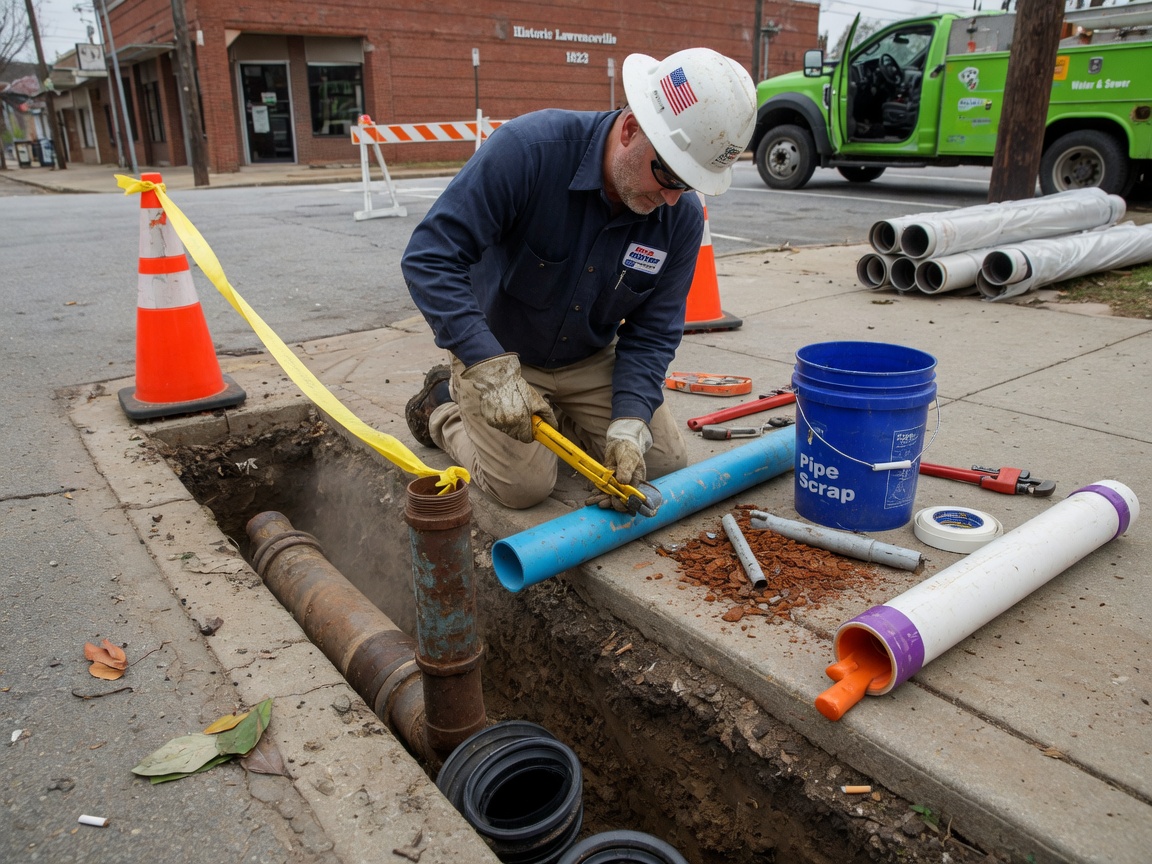
Lawrenceville’s older housing stock in the Lawrenceville Historic District and along Old Peachtree often contains galvanized or early copper lines that corrode from decades of mineral-rich well water and shifting clay soils. When these lines fail, we map the run, isolate the section, and pull new PEX or type-L copper through existing chases to limit drywall damage. Gwinnett County code requires dielectric unions at material transitions and pressure testing at 100 psi before walls are closed.
Newer subdivisions in Sugarloaf and Lawrenceville Village frequently need slab-leak repairs after tree-root intrusion or seasonal ground movement during heavy summer rains. We use acoustic listening and thermal imaging to locate the leak, then reroute with Uponor PEX-A to avoid future slab cuts. Exterior mains serving homes near Tribble Mill Park often sit in wet, low-lying soil that accelerates corrosion on galvanized services from the 1970s.
Whole-house repipes in Gwinnett County homes built before 1990 usually take two to three days and require coordination with the city’s 3/4-inch minimum meter supply rule. We protect finished surfaces with floor runners, install new shut-off valves at every fixture, and flush the system thoroughly before restoring hot-water service. Nearby cities such as Duluth and Suwanee share the same soil and water chemistry, so the same material choices apply across the county line.
Technician insight
In Lawrenceville the thing that catches most people out with Pipe Replacement is the combination of 1960s–1970s galvanized lines and the heavy red clay around the Lawrenceville Historic District; once one joint starts weeping, the next one usually follows within months because the soil holds moisture against the pipe.
Slab Leak in Lawrenceville Village
A homeowner near Lawrenceville Village reported warm floors and low pressure after summer storms. Camera inspection found a pinhole in the original copper under the slab. We rerouted the run with PEX-A through the attic, restored full flow the same afternoon, and left the slab intact.
Pipe Replacement Services We Offer
✓PEX Pipe Replacement
Replaces failed copper or galvanized runs with flexible, freeze-resistant PEX-A tubing that withstands Lawrenceville’s occasional winter dips without joints in walls.
✓Copper Line Replacement
Installs new type-L copper where code or homeowner preference requires rigid piping, common in Historic District renovations near the Gwinnett County Courthouse.
✓Slab Leak Pipe Replacement
Locates and reroutes leaking supply lines under concrete slabs typical in Sugarloaf and Hog Mountain homes using minimal excavation and PEX reroutes.
✓Whole House Repipe
Removes and replaces all interior hot and cold lines in one project, often chosen for pre-1980 homes in Lawrenceville Village before multiple leaks compound.
✓Exterior Main Line Replacement
Replaces the water service from meter to foundation on properties near the Gwinnett County Fairgrounds where clay soil and root pressure frequently damage older galvanized mains.
Pipe Replacement Cost in Lawrenceville, GA
| Service | Typical Range | What Affects It |
|---|---|---|
| Sectional PEX Replacement | $650–$1,800 | Varies with length and wall access in older Lawrenceville homes |
| Slab Leak Reroute | $1,400–$3,200 | Includes camera location and PEX bypass; higher if multiple leaks found |
| Whole House Repipe | $3,800–$7,500 | Based on square footage and number of baths; Historic District homes often need more protection |
| Exterior Main Replacement | $1,200–$2,900 | Trench depth and landscaping restoration affect final cost near Hog Mountain |
Ranges are typical for Lawrenceville, GA and confirmed with an exact written quote before any work starts.
How it works
- 1
On-Site Assessment
We arrive at the Lawrenceville address, shut off the main, and use camera and pressure testing to map the failed section and note any additional weak points.
- 2
Material Selection and Quote
We discuss PEX versus copper options, confirm Gwinnett County permit requirements, and provide a written scope before any work begins.
- 3
Removal and Installation
Old piping is cut out, new lines are run through protected chases or rerouted, and all connections are made with manufacturer-approved fittings.
- 4
Testing and Restoration
The system is pressurized, inspected for leaks, and returned to service; drywall access points are left ready for the homeowner’s contractor if needed.
Pricing
Upfront written estimates after inspection; final price depends on access, material choice, and whether rerouting avoids slab work.